Wednesday, August 8, 2018


Thursday, March 22, 2018
DOT Inspections: What You Should Prepare For

Most commercial drivers do not like the mention of DOT inspections, but it doesn’t have to be so hard if you know what’s expected of you. It is advisable to be conversant with the different requirements needed during the various levels of a DOT inspection. A DOT inspection is a routine annual checkup for all commercial motor vehicles (CMVs) weighing over 10,000 pounds to ascertain their safety on the road.
Here is what all commercial drivers should know about a DOT inspection:

During a level 1 inspection, the driver should be ready for a full DOT inspection and hence have their paperwork near as well as set aside enough time for the vehicle inspectors to go through all the vehicle parts. Some of the paperwork includes your Valid commercial driver’s license, Hours-of-service documentation, Motor carrier registration, as well as all the required permits. As a driver, you should be prepared to spend the better part of your day doing inspections hence minimize your day’s plans to avoid frustrations.
Conduct a pre-trip inspection
Just imagine if drivers took at least 10 minutes before commencing their trip to conduct a thorough inspection of their truck. Such a routine will eliminate various violations that can be easily corrected before the trip.
Violations such as deflated tires may be fatal if undetected, checking of lights are also critical so that you don’t find yourself in a tight spot when you discover later in the trip that you are having malfunctioning lights.

As a truck driver, you should always ensure that your vehicle is in excellent condition all the time because it is legal for an officer or inspector to stop you by the road and conduct an inspection which includes your driver’s paperwork as well as the general condition of the motor vehicle.
Before a DOT inspection, you should make sure that you have your electronic log and other supporting paperwork as they will be required for a level 3 inspection. If you do not have them with you, ensure that you know how to retrieve them to avoid unnecessary hassle.
Securing your cargo appropriately
If you are a commercial driver, you know that these inspections can happen at any time or place and therefore you must be keen to avoid failing a road inspection. It is essential to check your cargo to ensure that it is well secured so as not to pose any security risk. Unsecured cargo tops violations by many commercial drivers.
Make sure you know your vehicle controls
Sounds obvious right? But did you know that many drivers don’t know half of what is on their dashboard? As a driver make sure you know all the controls available in your vehicle so that you can clear with the inspection officers as quickly as possible.

During a DOT inspection, you should be able to stay calm and follow the many directions that will come your way during the process. Try to exercise patience and humility, and you will be on your way much faster. Take note that not cooperating with the inspection officer will only increase the time you spend at the inspection site.
Stay proactive about maintaining a safe truck by being aware of what each inspection criterion requires.
Is it time to replace your safety equipment, your Hi Vis clothing, or perhaps some lights on your truck? Now is the time to get everything ready for your next DOT inspection! East Coast Truck and Trailer Sales is your go-to place for truck parts, auto transport parts, and towing supplies.
Monday, October 23, 2017
Fire Extinguishers are Required Safety Equipment for your Truck(s)!
Fire extinguishers are required by law on all trucks, truck tractors, and buses - except those in driveaway-towaway operations. Per the Code of Federal Regulations 393.95:
A power unit that is used to transport hazardous materials in a quantity that requires placarding (see 177.823) must be equipped with a fire extinguisher having an Underwriters' Laboratories rating of 10 B:C or more.
A power unit that is not used to transport hazardous materials must be equipped with either:

A power unit that is used to transport hazardous materials in a quantity that requires placarding (see 177.823) must be equipped with a fire extinguisher having an Underwriters' Laboratories rating of 10 B:C or more.
A power unit that is not used to transport hazardous materials must be equipped with either:
- A fire extinguisher having an Underwriters' Laboratories rating of 5 B:C or more
- Two fire extinguishers, each of which has an Underwriters' Laboratories rating of 4 B:C or more
The fire extinguisher(s) must be filled and located so that it is readily available for use. The extinguisher(s) must be securely mounted to prevent sliding, rolling, or vertical movement relative to the motor vehicle.
Not only should you be carrying and mounting fire extinguishers as per the law, you should also know how they work, what the ratings mean, and be sure to know how to use them should the need arise.

Class A: used for ordinary combustibles such as wood, paper, plastics, and textiles.
Class B: used for flammable liquid and gas fires, such as oil and gasoline. They deprive the fire of oxygen and interrupt the fire chain.
Class C: used on fires that involve electrical equipment, which means that the fire extinguisher uses electronically nonconductive materials.
Class D: used on combustible metals (magnesium, titanium, sodium, and others).
For trucks, buses, and truck tractors not transporting hazardous materials, one extinguisher rated 5 B:C or more or two extinguishers rated 4 B:C or more are required. This means that the extinguishers are rated for classes B and C fires - Class B meaning it/they can be used on flammable liquids and gases, and class C meaning that it/they can be used on electrical equipment. The 4 and 5 mean that the extinguisher has 4 or 5 square feet of coverage.

Your truck must have a fire extinguisher (or two, depending on how you are meeting the legal requirement) and it must be securely mounted and easily accessible. You can't just throw the extinguisher behind your seat or leave it covered with tools in your toolbox. If your truck doesn't meet or exceed the legal guidelines, we offer fire extinguishers and mounting equipment to meet your needs. If you are looking for something specific and can't find it on our site, call us at 1-866-490-7278 and we'll help you find what you need.
At East Coast Truck and Trailer Sales, we strive to make your job safer and easier everyday. We have a variety of available safety equipment for your truck. No matter what truck you drive, we have the parts you need. Check out our towing parts, car hauling parts, DOT compliant Hi Vis Gear, or view our great selection of specials today!
Tuesday, October 17, 2017
Why Your Business Needs Customer Reviews
Your Best Salesperson Should Tell Your Story
You know your company has the very best product and/or service in the industry; however, no one seems to know this but you. In this era of frenzied business competition, how do you make sure people know what you do for your customers? Of the many forms of advertising and marketing, only one can change how someone "feels" about your company. Only one speaks to people, because it's by a real person. Your best salesperson should tell your story. You need your customers to share their stories - you need customer reviews, testimonials, and recommendations. With these references, you are now the star, instead of simply another player on the field.

There is no doubt that it can be difficult to get great customer reviews - if you simply sit back and wait for them. While customers may indeed love what you do for them, it's always hard to get someone to submit a great review on their own, and especially if you give them nowhere to do so. Negative reviews seem to be another story - we'll get to those later.

The truth is you have to ask for customer reviews. Somewhere you have an email list of people your company deals with. Write a personalized email (no bulk emails) to your customers asking for their thoughts on your products/services. When you get a good review back; and you will, simply ask the customer if it would be OK to use their review. Happy customers will likely agree to this, as they already appreciate what you do for them, and probably wouldn't mind influencing others as well. It's simply human nature to be an influencer. It makes us feel good about our purchasing decision when people act on what we tell them. With permission, use those reviews on your web pages, literature, and anywhere people see your company in public.

If you don't have time for this, find someone that does. Much as referrals carry weight for job interviewees, they are essential to your business for the same reason. Each customer interaction is an interview. You are "hired" or "fired" on the purchaser's review of your business' resume. If it is filled with recommendations, chances are good you'll be getting the job.

The beauty of this customer review system is that it also allows you the chance to correct any problems your company might also have. As much as we dislike getting negative feedback, it is a necessary part of business. Each one should be viewed as an opportunity. If you get a negative review from a customer, and it truly was something that was your fault, and an area you can improve upon; do so. Then communicate the steps taken to the customer. You become a stronger company with every review - be it negative or positive.

With that said, we at East Coast Truck and Trailer Sales would love to hear from you. Please leave a review on Facebook, Google, or contact us and let us know about your experience and what we can do to improve our relationship with you. As stated above, our best sales person is a happy customer.
Monday, September 25, 2017
Autumn Safety for Commercial Drivers

Autumn Safety for Commercial Drivers

Leaves on the Road
While the fall foliage is breathtaking enough to bring tourists out in droves, they're sure to be a pain once they hit the pavement. Especially after it rains, they can stick to the pavement and cause slippery conditions. The leaves may not be the only thing on the road, either - they can hide other more dangerous debris as well. If you see leaf patches on the road, slow down and avoid sudden breaking or swerving, since the leaves can cause hydroplaning or force your swerve into a spin. After safely navigating the area, be sure to call highway patrol or local authorities to alert them to the leaf debris so they can address potential hazards.Shorter Days - Longer Nights
The sun is already setting earlier each day. Less daylight means more travelling in the dark. Most drivers know that nighttime driving is inherently more dangerous, so remember your nighttime driving tips. Make sure all of your lights are operational before every trip, and that your headlights are in good condition. Increase your following distance - distance judgments are more difficult at night for both you and other drivers on the road. Check your mirrors frequently and be sure to keep them and your windshield and other glass clean.

Harvest Time
Fall is harvest season, and across the United States farmers will be gearing up for the annual harvest. In some states this process has already begun - with more tractors, combines, and trucks on the road. Tractors in particular more extremely slowly - other drivers should be aware of their presence and only pass when no other traffic is present. It can be a pain to be stuck behind a slow moving tractor while waiting for a chance to pass, but risking an accident is not worth it.
Winter is Just Around the Corner
It may not feel like it, but in a few weeks most of the United States will start feeling the chill of winter. While the holidays might still seem far off now, it is best to start preparing for weather before it gets here. You never know when you'll get an early frost or snowfall. Truckers should be prepared for icy conditions in addition to slick leaves and other dangers. Also be sure to check your maintenance schedule and make sure your truck is good to go.
Thursday, September 14, 2017
ELD Data Collection May Help Truckers Avoid Roadside Inspections
Data Collected May Help the Trucking Industry in Other Ways
Mention ELDs in any freight yard or truck stop and you are bound to hear to a wide array of opinions from those that praise them to those whose language is best left out of print. The fact is that they are with us to stay and thanks to some of the data mining experts at 'Keep Truckin', you might find they are a more valuable asset than you would have ever believed.No one in the trucking industry, carrier or driver, benefits from time spent going through roadside inspections, especially, a time-consuming Level 1 inspections.
'Keep Truckin' has discovered that by carefully studying information collected by their units that the risk of being subjected to this nuisance can be greatly reduced.
The company began by focusing on four key areas:
- Inspections by cargo types
- How violations vary from state to state
- Most common types of violatons
- Time period of inspections

Inspection by Cargo Types
Shoaib Makani, CEO and founder of 'Keep Truckin' explained: "Nobody actually notices it, but the fact is that certain cargo types do get a lot more Level-1 inspections. There can be many factors at play, but we analyzed all data from 2016, and a few categories kept coming on top. We hope fleets can use this information to maintain smoother operations and prepare their vehicles for Level-1 inspections."
Carriers Most Likely to be Inspected in Descending Order are:
- Driveaway-Towaway operations
- Fresh produce
- Chemicals
- Household goods
- General freight
The least likely to be inspected are those carrying coal, coke, or livestock.
How Violatons Vary State to State
While the regulations contained in the Safety Measurement System (SMS) are supposed to be uniformly used in the calculation of BASIC scores. Research by the American Transportation Institute has determined otherwise and this finding is supported by the ELD data.
Makani noted - "Violations are a big problem for fleets and CMV drivers. With our data, we found that different states may have varying degrees of strictness. And, if you are operating in states like Connecticut, Idaho, and Louisiana, you need to be more vigilant. Having proper tracking systems and electronic logs in place can help fleets and drivers prevent violations."
Most Common Types of Violations
Noting the above, it should not be a surprise that the most commonly cited violations also vary from state to state. But it was discovered that overall the most commonly occurring violations were:
- All mandatory lamps should be capable of being operated at all times (704,167 violations).
- Parts and accessories must be in safe and proper operating condition at all times (293,118 violations).
- Every commercial motor vehicle must be operated in accordance with the laws, ordinances, and regulations of the jurisdictions in which it is being operated (190,337 violations).
- The motor vehicle should be free of oil and grease leaks (189,981 violations).
- The pushrod stroke must not be greater than the values specified (181,320 violations).
Time Period of Inspections
Perhaps the most valuable bit of information that can be discovered from studying ELD reports is that depending on your location the majority of inspections seem to occur during set time periods.
As examples, 'Keep Truckin' offered this breakdown from the State of Kansas. In Johnson County, 78.6% of inspections occur between the hours of 8 a.m. and 2 p.m. However, in Belleville, KS, 80% of inspections take place between 3 p.m. and 9 p.m. In Sedgwick County, 53% of inspections are between 7 a.m. and 10 a.m.
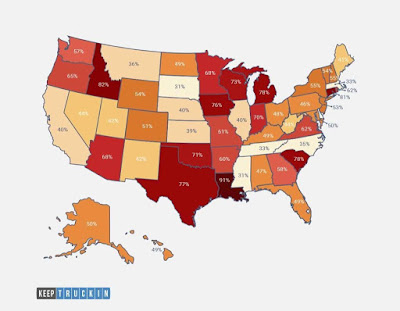
Being aware of what inspectors are most focused on for a given location and the times that your rigs are most likely to be inspected can be invaluable in maintaining a positive safety score. After all the easiest check to pass is the one you never drive into.
East Coast Truck and Trailer Sales will guarantee the BEST customer service and the BEST price on your towing parts and car hauler parts. Getting the right part for the job is critical in the towing and auto transport industries - which is why we carry a variety of products that are safe and efficient and will fit your needs. Shop online for towing supplies, auto transport supplies, or give us a call at 1-866-490-7278 today! We focus on providing you with great products and service to help grow your business.
Monday, August 28, 2017
Hi Vis Clothing is a Must for Today's Work and Play


So who is required to wear Hi Visibility Gear? Accident site investigators, airport baggage handlers and ground crew, car haulers, emergency responders (including Police, Fire, and EMS), Forestry workers, Miners, Parking workers and toll-gate personnel, paving crews, railway workers, survey and flagging crews, towing professionals, and utility workers. Hi Visibility apparel is also recommended for bicyclists and motorcyclists since it makes them more visible in roadways. Hi Vis vests, Hi Vis t-shirts, Hi Vis jackets, and Hi Vis rain gear are all great choices to make sure you’re seen on the road.

Remember – Hi Visibility garments are made that way and certified by manufacturers for a reason… because adding reflective stripes to uniforms or other garments does NOT make them ANSI compliant. Hi Vis Clothing must offer high visibility during daylight and nighttime hours and must have one of the fluorescent colors as the background: Lime Green, Orange, or Red – in order to meet the standard. There are additional requirements as well about the types of materials used and how bright and/or reflective the materials are.
Take a few minutes to check your Hi Visibility vest, t-shirt, jacket, or pants occasionally to make sure that they are still in good condition, that all of the reflective tape still works properly, and that there are no rips and tears that might disqualify your gear from meeting the ANSI/ISEA standards.
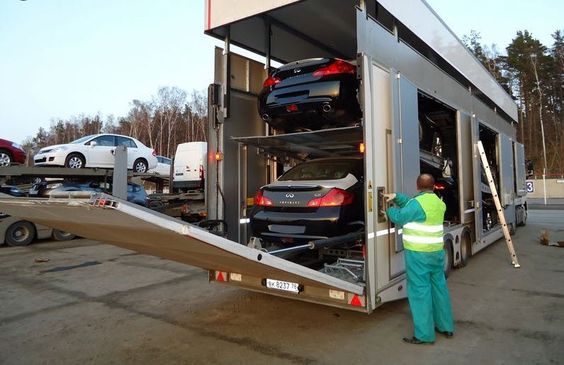
East Coast Truck and Trailer Sales offers customizable GSS Safety Hi Vis Gear – vests, t-shirts, jackets, and pants – with NO minimum order. Add your logo to your Hi Vis gear for a competitive price!
GSS Safety is a manufacturer specializing in ANSI-ISEA approved Hi-Visibility apparel: including vests, t-shirts, waterproof jackets, waterproof rain gear, and accessories. GSS products have been tested by most international standards and each of their products

These products are made with premium materials and are both durable and affordable. Ripstop fabrics are offered with some styles, using a special reinforcing technique that makes them resistant to tearing and ripping. GSS offers a selection of Hi Vis gear with Comfort Reflective Tape, which provides more flexibility over solid tape.
Check out the full selection of available Hi-Vis gear online or give us a call at 1-866-490-7278 to order your customized Hi Vis apparel today!
Friday, August 25, 2017
Training Announcement: National Traffic Incident Management (TIM) Responder Training

Law Enforcement - Fire - EMS - Transportation - Towing & Recovery - Communications

A new coordinated,
multi-disciplinary training program developed through the Second Strategic
Highway Research Program (SHRP 2) is available for all emergency responders and
those supporting traffic incident management operations. This training puts
police, firefighters, state and local departments of transportation, towing and recovery professionals, medical personnel, and other incident responders on the
same page, leading to a safer, faster, integrated responder team.
Save Lives
– Faster incident response and clearance times result in
fewer secondary crashes.
– Training results in less exposure of responder team to
moving traffic during recovery.
Save Money
– Less congestion leads to fewer freight and travel delays
in backups.
– Fewer secondary crashes save on insurance claims.
– Faster cleanups lead to cost savings for incident
personnel.
Save Time
– Smarter response techniques cut congestion clearance time
– decreasing delays.
Training is provided at NO COST. Receive 4 hours of
in-service credit through DCIS, OEMS, OR VDFP.

Date: September 16, 2017
Time: 8:00am – 12:00pm
East Coast Truck and Trailer Sales
2906 Elmhurst Lane – Portsmouth VA 23701
To Register, contact: Jim Stanek at
James.Stanek@VDOT.virginia.gov
*When registering, please provide agency, rank, name, and
email address*
East Coast Truck and Trailer Sales is your Auto Transport Equipment and Towing Parts Superstore. We have been a part of the towing and
auto transport communities for more than two decades. Stop by our store at 2906
Elmhurst Lane, Portsmouth VA 23701 and check out our wide selection of wreckers
and rollbacks. You’ll find the highest
quality products to keep you on the road and earning money. We offer custom
length towing chains, time saving 4 point tie-down systems, and led light bars.
Thursday, August 17, 2017
Come Visit Us at the Dallas Tow Show!

Come visit us at the Dallas Tow Expo!! We are at Booth 627. The tow show is being held at the Gaylord Texan Resort and Convention Center in Grapevine, TX 76051.
Tow Show hours are Friday 8/18 and Saturday 8/19 11:00AM - 5:00PM. We have great deals and would love to meet and greet our customers in person. Hope to see you there!
Thursday, August 10, 2017
SmartLINQ - Peterbilt's Built-In Monitoring System
Here to Help You Stay on the Road
SmartLINQ is a factory installed diagnostic system in all new
Peterbilt trucks – including all of the new Petes on
our lot!! – and it is designed to help you stay on the road. SmartLINQ helps drivers,
fleet owners, and vehicle service and maintenance coordinators by remotely
keeping track of engine and aftertreatment diagnostic codes, notifying the
appropriate parties of problems that need to be addressed, and instantly giving
the driver an easy to understand alert with directions on how to proceed.

The online portal for SmartLINQ, through PACCAR, allows the
fleet owner or truck maintenance person to view all of the fleet’s trucks color
coded to show their current engine health, allows for customized notifications
24/7/365 of alerts from trucks, and tracks the vehicles through North America.

All new Peterbilt trucks come with a complimentary two-year
subscription (longer with applicable warranties) to SmartLINQ. Whenever repairs
are needed, SmartLINQ provides contact information for the closest three
Peterbilt dealerships in order to get the repair handled quickly and
efficiently. The system can be set to connect with these dealerships
automatically so they can be prepared for you with the necessary parts and
service to get you back on the road.
Drivers will see easy to understand fault codes that say whether
they can keep running as normal, seek repairs immediately, or stop engine
immediately, depending on the severity of the engine or aftertreatment issue.
SmartLINQ will, at the same time, send their information to the PACCAR back
office, which generates the email notifications via user-friendly text and
graphics to convey the problem and what needs to be done to solve it.
SmartLINQ is designed with you in mind: affording maximum
up-time, streamlining fleet service management, and ensuring trucks are running
at their best so you can keep on truckin’.
Need a new Pete? Check out ourinventory online or call 1-800-849-2178!
Tuesday, August 8, 2017
U.S. Senate to Consider Bill Opposing Increases in FET
H.R. 2946: Heavy Truck, Tractor, and Trailer Retail Federal Excise Tax Repeal Act of 2017

A new bill has been introduced to U.S. Congress that will seek to repeal the federal excise tax (FET), which is at present 12 percent. The FET on heavy duty trucks dates back to 1917 when it was introduced to defray the cost of World War I. The tax on new heavy duty trucks later grew from 3 percent in 1917 up to the 12 percent we see today.
The 12 percent FET on the purchase of heavy duty trucks is a burdensome tax – higher than taxes for all other vehicles, and when combined with recent federal emissions and fuel-economy mandates, can add up to thousands of extra dollars when purchasing a new truck. At its present 12 percent, the FET depresses heavy duty truck sales and, as a result, slows companies from replacing their old fleets with new cleaner and more fuel-efficient trucks.
Truck purchase prices have been hiked which directly impacts the cost of food, consumer goods, as well as other products. “This is taxation on American jobs”, said the bipartisan group of U.S. House members led by Sen. Cory Gardner. The truck FET affects more than 1,800 commercial truck dealers in America and the National Automobile Dealers Association and American Truck Dealers which has over 7.3 million Americans employed in the U.S. trucking industry. The difficulty and complexity of administering FET forces truck dealers to spend their time and effort navigating complicated IRS regulations associated with collecting the tax.
The move has the full backing of American Truck Dealers, commercial trucking, towing, and auto transport companies and should be considered by the House Ways and Means Committee when they draft legislation to reform the overall tax code.
 Given the current financial condition of the Highway Trust Fund, and the possibility of an infrastructure bill, increasing the FET remains a prospect. Lately, reports published by different government and NGO gatherings have proposed expanding this tax by an extra 1 to 10 percent. However, Congress should oppose any further increase in the FET and consider lowering it if not eliminating FET to deal with detrimental impacts on safety, the environment, and the trucking industry. Congress should include H.R. 2946 in its upcoming tax reform bill. Lowering or – hopefully – eliminating the FET will help the industry grow.
East Coast Truck and Trailer Sales has a huge selection of trucks and trailers on the lot – we have what you’re looking for. Check out our car haulers, wreckers, and rollbacks in inventory today and give us a call at 1-800-849-2178. Our in house finance department works with over 30 different lender types to get you on the road faster. Let us get you in the truck you need today!
Monday, August 7, 2017
Simple Steps to Keep your Truck Tires from Eating Profits Alive
We know tires are expensive. We also know most drivers mean to keep up with their tire maintenance programs, but driving often gets in the way. Until you drop a tread, or pick-up a bolt, it's easy to forget about your tires. Problem is, tires are very unforgiving, and will eat up your profits any chance they get. Don't let them. Here's how.
Any tire showing damage is trying to tell you something. You might need an alignment if you see certain patterns, so knowing which tire patterns to look for helps you identify the problem. Tire sites usually have a chart on types of damage to expect with each problem.
Keep tires of the same diameter together (New with new. Used with used). If not, you end up with one tire skipping and scraping the road because it isn't the same size. Premature wear isn't pretty.
Know when to replace/retread your tires. Minimum legal depth is 4/32" on the steer and 2/32" on others. Tires wear at approximately 1/32" per 13-14,000 miles. Measure your treads now, and mark their expected replacement dates based on your average mileage. Problem solved.
Service those bearings and kingpins. This WILL make your tires wear better.


Always install new tires - not retreads, on your steering axles. Better safe than sorry when it comes to steering gear.
Make sure your inflation is correct for your load. Underinflated tires, especially under load, will chew tires quickly.
Adjust pressures for cold climates you are driving in. If you're coming from a warmer area, when you hit cold weather areas the air in your tires contracts, and suddenly you're running underinflated. Check your pressures.
Damaged, improperly balanced wheels will damage tires. Look over all of your wheels for signs of damage - every trip.
Keep radials with radials, and bias ply with bias ply. Don't mix them, or you will see a shorter tire life.
Tires do have a maintenance schedule. Whether you're a single O/O, or have a fleet of trucks, have a plan for replacement and/or repair with an escrow fund and based on mileage and you'll keep those tires from eating your profits alive.
Friday, August 4, 2017
Summer Towing Tips: Avoid Heat Illness, Get Ready for these Common Summer Issues
How to Stay Cool and Safe This Summer
The hot weather that's paired with the summer months adds more difficulty to the towing industry. Not only does the heat provide additional health risks for you, but also for your towing truck and for the vehicles of your customers. Here are some summer towing tips for avoiding heat illnesses and dealing with common summertime towing issues to help you ride out the heat waves.
Safety Tips for You
 Working out in the sun provides two big threats for towers: heat exhaustion and heat stroke.
Heat Exhaustion
Heat Exhaustion is an illness that occurs through a combination of exposure to high temperatures and dehydration. While not as serious as heat stroke, failing to intervene may lead to more danger from heat related illnesses.
Heat Exhaustion is an illness that occurs through a combination of exposure to high temperatures and dehydration. While not as serious as heat stroke, failing to intervene may lead to more danger from heat related illnesses.
Symptoms of heat exhaustion include:
- Confusion
- Fatigue
- Headaches
- Fainting
- Pale skin
- Dizziness
- Confusion
- Fatigue
- Headaches
- Fainting
- Pale skin
- Dizziness
Heat Stroke
If heat exhaustion is left untreated, you may suffer a heat stroke. A heat stroke is a potentially fatal heat related illness that occurs when the body temperature reaches 104 degrees. If you are suffering from a heat stroke, you need medical attention immediately.
Some symptoms of heat stroke include:
- Headache
- Dizziness
- Decrease in sweating despite heat
- Muscle cramps
- Nausea
- Confusion
- Seizures
- Unconsciousness
- Headache
- Dizziness
- Decrease in sweating despite heat
- Muscle cramps
- Nausea
- Confusion
- Seizures
- Unconsciousness
Prevention Tips
While heat related illnesses are scary, protecting yourself from them can be quite easy. The best prevention tip is to stay cool. By wearing lightly colored clothing, taking breaks in cool areas, and drinking fluids frequently, you can stay safe from the dangers of the heat.

Common Reasons for Towing in the Summer
High temperatures aren't the only danger in the summertime. These are the things you can expect to receive towing calls for this summer:
Battery Failure
Battery Failure occurs often in the summer months because of the inability of the battery to cool down, which is a result of the weather and the heat from the engine. The evaporation of electrolytes occurs at high temperatures and causes internal damage to the battery grids, resulting in battery failure.
Tire Damage
An increase in temperatures results in added air pressure in tires. When the pressure of an inflated tire increases, the potential for blow-outs increases.
Overheating Vehicles
Poorly maintained cooling systems can fail, resulting in overheated vehicles. If you are called to tow an overheated vehicle, it is wise to carry sorbents in the event of spilled coolants.
Construction Zones
The driving conditions in construction zones are more hazardous because of debris in the road. This debris can cause damage to the vehicle. If you need to tow a vehicle from a construction zone, be wary of the distractions in the surrounding area and the smaller amount of available towing space.
Bad Weather
Storms are more severe in the summer months and can provide dangerous conditions for drivers. Floods, loss of control from hydroplaning, and hail storm damage are all things that can lead to more towing calls.
Lockouts
People spend more time outside in the summer. Because of this, more people lose their keys or lock them inside their vehicles. A locked-out car may need to be towed to a dealership in order to get a replacement key.
If you find you need any parts or service this summer to keep you on the road, East Coast Truck & Trailer Sales is the place to come - choose from our selection of reliable, DOT compliant tow truck parts. Supplying you with the everyday tools you need to get the job done safer and easier is our number one priority. Check out all of our towing parts online or give us a call today at 1-866-490-7278.
Wednesday, July 26, 2017
Free Shipping Is Not Really Free!
We all love really love free shipping but let’s face the truth. Like free appetizers at a restaurant, the cost is either baked into the prices of the products, or it's part of a strategy to increase a customer's order size. Knowing the biases of the customer base, and how good free shipping makes them feel, increasing product prices by a small, unnoticeable amount is occasionally the strategy retailers will use to offer the incentive and cover their costs. Often, the lack of quality customer service is the most common way for a company to reabsorb the costs associated with free shipping. Time after time, consumers swap horror stories of customer service phones that just ring and ring, disconnect over a period of hold time, or messages that go unanswered. For many small online retailers that are trying to compete with powerhouses like Amazon, Target and Zappos, this is the easiest tactic to stay in the game. Another strategy retailers employ is requiring a minimum purchase in exchange for free shipping. Processing larger orders costs companies less than filling a multitude of smaller purchases. Consumers, attracted by the offer of free shipping, purchase more, which reduces overhead costs and allows the retailer to reabsorb the shipping costs. The customers who don’t purchase enough to waive the shipping usually wind up paying a slightly inflated shipping fee to make up the difference. Again, the money has to come from somewhere. Someone has to pay the cost of shipping. If customers or investors aren’t footing the bill, e-commerce companies could easily lose money on every free shipment. That’s sustainable if a new round of financing is coming; otherwise it can plunge a retailer or e-commerce company, especially a smaller one, into financial oblivion. In fact, free shipping was partly responsible for one of the most prominent crash-and-burns of the 1990s dotcom boom. Pets.com, whose commercials are still seared into the consciousness of many readers of a certain age, offered free shipping on expensive-to-ship dog food. In his book Thinking Inside The Box, author Kirk Cheyfitz explained how low profit margins due to an insistence on free shipping helped sink Pets.com.
The goal at East Coast Truck & Trailer Sales is to remain in business for years to come while providing auto transport and towing professionals the lowest price to-the-door in the industry. We’re not going to build our shipping costs into the price of our products or make those who purchase less pay more for shipping. Like the great retailer Walmart, we provide our customers “Always Low Prices”, competitive shipping and expert service. Our bottom line is clearly the lowest. See for yourself – shop and compare on towing parts and supplies, tow straps, winch cables, lock out kits, tire skates, jumpboxes, tow dollies, snatch blocks, and more at Parts.ECTTS.com.
Wednesday, March 18, 2015

Friday, March 6, 2015
Simple Steps To Keep Your Truck Tires From Eating Your Profits Alive
We know tires are expensive. We also know most drivers mean to keep up with their tire maintenance programs, but driving often gets in the way. Until you drop a tread, or pick-up a bolt, it's easy to forget about your tires. Problem is, tires are very unforgiving, and will eat up your profits any chance they get. Don't let them. Here's how.
Any tire showing damage is trying to tell you something. You might need an alignment if you see certain patterns, so knowing which tire patterns to look for helps you identify the problem. Tire sites usually have a chart on types of damage to expect with each problem.
Keep tires of the same diameter together (New with new. Used with used). If not, you end up with one tire skipping and scraping the road because it isn't the same size. Premature wear isn't pretty.
Know when to replace/retread your tires. Minimum legal depth is 4/32" on the steer and 2/32" on others. Tires wear at approximately 1/32" per 13-14,000 miles. Measure your treads now, and mark their expected replacement dates based on your average mileage. Problem solved.
Service those bearings and kingpins. This WILL make your tires wear better.

Always install new tires - not retreads, on your steering axles. Better safe than sorry when it comes to steering gear.
Make sure your inflation is correct for your load.Underinflated tires, especially under load, will chew tires quickly.
Adjust pressures for cold climates you are driving in. If you're coming from a warmer area, when you hit cold weather areas the air in your tires contracts, and suddenly you're running underinflated. Check your pressures.
Damaged, improperly balanced wheels will damage tires.Look over all of your wheels for signs of damage - every trip.
Keep radials with radials, and bias ply with bias ply. Don't mix them, or you will see a shorter tire life.
Tires do have a maintenance schedule. Whether you're a single O/O, or have a fleet of trucks, have a plan for replacement and/or repair with an escrow fund and based on mileage and you'll keep those tires from eating your profits alive.
Wednesday, January 14, 2015
It’s already been a year!? Weren’t we just making sure we wrote 2014, instead of 2013? Well, as  you might expect, we need to review the ECTTS year that was 2014, and let you in on some things that are going to happen in 2015.
you might expect, we need to review the ECTTS year that was 2014, and let you in on some things that are going to happen in 2015.
With the introduction of a new parts web site, we accomplished one of our big goals this year. This had been planned for a while, and the implementation took a bit longer than we thought, but our new e-commerce site looks great, and works even faster. You can find our great new site at https://parts.ectts.com/index.php, if you haven’t already been there. It’s not just a new design, though. We’ve added new ways to pay, as well as a chat function, so you can ask us questions and get immediate feedback. With larger graphics, and redesigned categories, it’s easier to navigate, as well.
Just as before, we’ve also been busy writing and blogging original articles about our industry. This year, we’ll be bringing you even more of them each month, as well. Like the articles, the blog photos and artwork are all original, and created right here. If you’re interested, you can see all of our latest blogs right here: https://parts.ectts.com/index.php/blog/
Some blogs from last year you might find interesting:
- Are You Really Prepared For The Economic Upturn?
- Fifth Wheel Maintenance
- Height sticks and GPS
- Recognizing Truck Driver’s Contributions
- Using an Open Wi-Fi Network on Your Wireless Device
Like the parts website, our newsletter has been redesigned from the ground up. We now bring you more articles, artwork and insight about our industry. You’ll also notice our new specials. We’ve tried to make them even better than they were before, so be sure to look for them in your e-mail. You can sign up for our e-mail newsletter on our home page. Just look for this area:
It probably goes without saying that you will also find us on social media. One of the big changes this past year is that we’ve begun posting on a daily basis, or more, according to what’s happening here at East Coast Truck and Trailer Sales. If you’ve not been to our social pages, we would invite you to drop by.
So, what are we doing different next year? Just like our parts site, we’ll be redesigning our web site for ECTTS.Com, as well as making our parts site even better. You’ll notice new ways to ship your orders, contact us, and look at trucks. In all, we want to be your go-to site for trucks, parts and service. If you know of a way we can improve in the new year, please feel free to contact us on our web page, e-mail address or simply phone us. We can’t wait for the new year, so we can serve you even better.
Tuesday, December 30, 2014


Subscribe to:
Posts (Atom)